Helping Kids Conquer DIBELS!!!
Have you heard the news? We've Moved to HeidiSongs.tv!
Our new website features an online video streaming service, updated blog posts at Heidisongs.blog, and a wealth of fresh resources designed to make learning even more fun and engaging.
You can also continue shopping for our educational products there and at our Teachers Pay Teachers store!
Head over to HeidiSongs.tv now and explore all the exciting new features.
See you there!
__________________________________________________________________________
Do you do DIBELS at your school? If you are a parent, does your child take DIBELS tests? DIBELS seems to be quite a mystery for many adults, both parents and teachers! In this blog post, I will try to shed some light on what the "dreaded DIBELS" tests are, what they are supposed to measure, and what the results are supposed to mean. Finally, I will give you some ways to help your child improve his or her phonemic awareness and phonics skills so that he or she can do better on the next round of DIBELS tests.

DIBELS stands for "Dynamic Indicators of Basic Early Literacy Skills" and many, many school systems are now using these tests as a measure of how their students are doing in reading, and as an identifier of students that may be "at risk." Children that are considered "at risk" are those that, according to research, are most likely to possibly fail at some point in their school careers. Therefore, extra assistance is often suggested in order to prevent such failures.

We now use the "DIBELS Next" assessments in my district.
The new "DIBELS Next" assessments are now part of my school life, and seem to be the hot topic at lunch and at grade level meetings. Why did some of the children do poorly when they have done so well in assessments done by their own teachers in class? What went wrong, and why? And for those children that did well, what was it that made the difference? And most important of all: what is the best way to help all of the children improve on these assessments?

In my district, test proctors are sent in to test the children each trimester so that the tests will all be given uniformly and equally. That way, the scores can be compared without fear of bias of any kind. Also, no instructional time is taken away due to the teacher having to administer these tests. And I can certainly appreciate these things! The only problem is that there are many factors about the tests that are unknown to the teachers. These are some of the unknowns:
1. The quality of the proctors may or not be equal.
2. The proctors may have varying levels of interest in seeing that the children do well on the tests. After the proctor has given her 100th test, does she really care how the child did anymore?
3. Did the proctor try to get the child's attention before giving the test directions? This is very important, since the directions can only be given one time. Also, if the child doesn't view the proctor as an authority figure, then he or she may not feel compelled to really pay attention and try. So if the proctor doesn't insist that the child pay attention and try, then some of them just might not.
4. Did the proctor score the tests and enter the scores into the system correctly? Were there any mistakes that happened at that point? We wondered about this, because some of the children's scores simply didn't make sense to our team.

One of my team mates decided to read as much of the DIBELS Next manual as she could, and figure out the testing process as much as possible. And my hat is truly off to her, because it was a VERY time consuming process! It is because of her that I managed to figure much of this out, so thanks so much to my good friend, Tammi!
First, if we are going to do better on the tests, then we need to know exactly what is on those tests. It's also important to memorize those acronyms, which are ALL OVER those tests and the accompanying graphs that come with your scores!
Here are the tests that they must "conquer." Each one of these is a one minute timed test! I have found, when giving children timed tests, that some of them will spend the entire 60 seconds just staring at the sand falling down inside of the egg timer, so now I use the timer on my iPhone, which is a lot less distracting, ha ha! Actually, I think the fact that they are pressured to perform with a timer is much of what makes these tests so hard on little children and causes some of them to "freak out." I also wonder at the developmental appropriateness of timed tests such as these for children as young as four and five years old. I'm guessing that the NAEYC might have some strong opinions about this....
First Sound Fluency (FSF)
Children listen to a word and give the first sound that they hear in it. This includes words that begin with digraphs (sh, ch, wh, th) and consonant blends (words like "spin," "flight," and "nest"). In reading through the manual thoroughly, we discovered that children are NOT to be penalized for speech problems or other articulation delays, such as making the /w/ sound in place of the /l/ sound. (This again made us wonder how the test proctors could possibly know which children have speech issues and if they then scored them according to the directions. But then is our first year as a district working through this process, and I'm sure we will all work through these issues eventually, though!)
Letter Naming Fluency (LNF)
Children need to look at the letters in random order, and mixed up with capitals and lower case letters, and identify them as quickly as possible. To practice this, I made a power point presentation of the alphabet in random order, and have the children try to name the letters as I click through them as quickly as possible.
Phoneme Segmentation Fluency (PSF)
Children listen to a word and must give "all of the sounds that they hear in a word." These words include digraphs (sh, ch, wh, th), diphthongs (ou, ow, ay, oy, etc.), r-controlled vowels (words like "card" or "park,") and words with blends (words like "spin," "flight," and "nest"). I did not notice any multisyllabic words on the list, though.
Nonsense Word Fluency (NWF)
The children are given some nonsensical consonant-vowel-consonant (CVC) words (such as "mup") and some vowel-consonant (VC) words to read (such as "uv"), and they are supposed to try to read them without first saying the sound of each letter aloud. If they can read the word fluently, without stopping to say the letter sounds and blend it aloud, then they are given a point for Whole Words Read (WWR). They are also given a point for each of the Correct Letter Sounds (CLS) in each word. If the child cannot read any of the nonsense words, then he can still get points for the correct letter sounds. It is important to understand that the child is actually penalized for giving each letter sound aloud before sounding out the word! They get no credit for having read the word at all if they give each letter sound and blend it together out loud before giving the word. They have to do it all in their heads before giving the nonsense word.
This rule is about as close to NONSENSE as I can think of, if you ask me! I wish I understood why this determination was made, because we spend HOURS trying to get the children to blend the words aloud, and now they are NOT supposed to do it! In fact, very often if the children refuse to blend the sounds aloud, what usually happens is that they GUESS at the word they are trying to read and get it WRONG! So go figure! I assume that they are going for the fluent reader and while I applaud this, I still think that it would be okay to give credit for the words read, even if they blended them aloud. The children that read the words fluently will read more of them because they read them faster and get more points, right?
I understand the reasoning why the children are asked to read nonsense words: this guarantees that the child is sounding out the word and has not memorized anything. Therefore, the result of the test is that we know a lot about the child's phonics skills. Learning to sound out all of these little nonsense words is important because when children encounter longer, multisyllabic words that they don't know, (such as encyclopedia,) each one of those syllables in the word is actually a nonsense word that must be sounded out. If they lack phonics skills, they cannot attempt to read these longer words and must guess at them. THAT's why kids need to learn phonics... and that's why we test them in this way- to see if they have the skills they need as opposed to memorizing words.
More Useful Acronyms to Know (MUAK LOL)
The first time I downloaded the DIBELS graphs of my students' progress and looked at them, I stared at them for about ten minutes and tried to figure them out. It wasn't so much the graphs that were confusing, it was the CONSTANT and COMPLETE use of acronyms without a single key or clue to what they meant anywhere on the graphs, even on the titles! I actually threw the first set of graphs away because they were so useless to me. Later when I went to a grade level meeting, we had to download and print them again and look at them. That's when I found out what all of the acronyms stood for. So here's a little bit of help for all of you that may be struggling with the same issue. You can thank me now. :)
DIBELS Composite Score (DCS)
This is not a test, but an average of all of your DIBELS scores. You'll find it on some of your DIBELS graphs. I just thought I would let you know what it means so that you don't have to spend a half an hour trying to figure it out.
Likely to Need Core Support (CS)
Translation: The child hit the benchmark and is doing great!
Likely to need Strategic Support (SS)
Translation: The child did not hit the benchmark but is not at the rock bottom, either. Could be worse!
Likely to need Intensive Support (IS)
Translation: Bad news. The child is in the very bottom third of the group and signs point to future failure in language arts unless you remediate NOW!
Even though our school's average Kindergarten scores were actually pretty good, we thought that it would be good to improve as much as possible. Here are the things that we decided to do as a team to help boost our DIBELS scores for the next round of tests:
1. Phonemic Awareness and Phonics Instruction
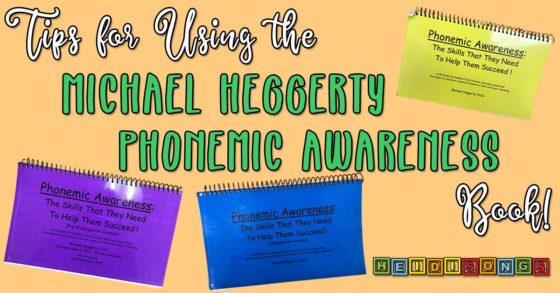
We already are working with our required programs of SIPPS and the Michael Heggerty Phonemic Awareness book, which we try very hard to work in daily. This Heggerty book only takes about ten or fifteen minutes to get through, by given the short attention span of the average Kindergartner, this can be an issue when you also have lots of other things to cover! But we have decided to make it a priority, and it really does seem to help.

Michael Heggerty's Phonemic Awareness Kindergarten Level Book
The SIPPS (This stands for Systematic Instruction in Phonics and Phonemic Awareness) program helps kids learn to blend sounds into words quite well, but it seems to need a bit of supplementation in the area of phoneme segmentation with the diphthongs, digraphs, blends, and r-controlled vowels. Or at least, let me put it this way: MY class needs more practice this year than they are getting in just the SIPPS book, LOL!

SIPPS Manual with Colored Tabs for Each of My Color Groups
SIPPS also doesn't introduce nonsense words, so we have had to find other ways to work on that. For more information on that, see these blog posts: (Several of them have free downloads on nonsense words in them, too!) By the way, we are working on a new great download of Color-by-Nonsense Word Worksheets! Hopefully it will be done really soon!
Gone Fishin' For Nonsense Words!
More Tricks for Sounding Out CVC Words (See Section 7)
Sounding Out Nonsense Words and CVC Words
We're Bugging Out All Over!
For learning to sound out three letter words in general, we are also using the Word Family Songs DVD! The songs show kids how to blend three sounds together in a fun way, and they usually really like it, too- so you don't have to twist their arm into practicing, and that's always nice! Here's a video clip of what it looks like.
At my school, we are all also using my CVC Book and the Sounds Fun Cards, Poster, and DVD. I think that these things have really helped a lot! The CVC book also helps get the kids sounding out real words, and gives them lots of practice in this area.

Flash Cards from HeidiSongs CVC Book
The Sounds Fun Cards, Poster, and songs really do help the children isolate and chunk the diphthongs, digraphs, and r-controlled vowels as unique sounds, I think! This is probably because there is a motion to go along with each sound. Often, when we hear the sounds as we segment the words, the children will say, for example, "Oh, it's the /ch/ sound!" and make the choo choo train motion. What Sounds Fun does for phonemic awareness instruction, (I think,) is help the children identify and classify diphthongs, digraphs, and r-controlled vowels as real and identifiable sounds that they can even write down, just the same as they would of any of the other regular 26 letter sounds commonly taught in Kindergarten. I think it has made a HUGE difference! Again, the key is that it is made to be fun, so fighting the kids on practicing is not an issue. Here is a video clip, so you can see what that looks like. (The new version of this DVD is animated though!)

Sounds Fun Poster, Mounted on a Tri-Fold Presentation Board
2. Practice, Practice, Practice!
If this is going to work, then you have to know what is on those tests. We also have decided that the children need to be familiar with what the tests look like so that they don't freeze up when they see them! It's bad enough that they get pulled out of class by a stranger and are given these tests. They need to be familiar with what is coming.
For Practicing Nonsense Words:
I created a practice page that looks just like a DIBELS nonsense word test that I could project up on my big screen and have the whole class practice at the same time. I can also use it as an informal assessment if I want to torture myself and my students with more testing. I am giving you this as a free download here today, just in case you want to try it, too!
For Practicing Segmentation and First Sound Fluency:
I pulled together a list of words that included initial and final blends, digraphs, and diphthongs, and r-controlled vowels for practice in segmentation and first sound fluency that you can find here. We found that it can be pretty tricky for the children to pick just the FIRST sound off of a word when there is a consonant blend at the beginning of it, such as in a word like "flip." They want to tell you that the first sound is "fl" rather than /f/.
Also, our kids get very good at segmenting three letter words, but then get lost when segmenting longer words. So practicing segmentation with longer words is a must! I have found this list to be valuable when practicing blending as well. All of this gets tedious at times for the kids, so you may want to throw in some active responses! For example, have them pull their hands apart in the air or slide their hands down their arms when segmenting words. My friend Tammi has her kids stop at the shoulder, elbow, and wrist when they get to each sound to help them "feel" it as a break in the sound. I'm going to try that one next week! You may also wish to check out this blog post on what to do when kids are struggling to "hear" beginning sounds.
3. Prepare the Kids for the Testing Pull Out
We decided that we need to really know what the children will be tested on before they get pulled out, and make sure that we have practiced it daily during the week previous to the test. This needs to be done right off of the practice pages that I created that look like the test. That way, the testing page itself should look familiar to them and the freaking out will be minimal! And, that way, when the children get pulled, they should already know what the directions are, so it shouldn't matter too much whether the child is paying attention when the directions are given or not! They ought to already know what the directions are- HOPEFULLY!

----------------------------------
Follow me! Did you enjoy this post? Do me a favor and share it with your friends! And follow this blog by signing up for my email updates here, or follow on Bloglovin', or follow me on TPT! I'm also on Pinterest, Facebook, Twitter, Instagram, Google+ and YouTube, too! Don't forget to sign up for our email newsletter for special deals and promo codes that you won't find out about anywhere else.

DIBELS stands for "Dynamic Indicators of Basic Early Literacy Skills" and many, many school systems are now using these tests as a measure of how their students are doing in reading, and as an identifier of students that may be "at risk." Children that are considered "at risk" are those that, according to research, are most likely to possibly fail at some point in their school careers. Therefore, extra assistance is often suggested in order to prevent such failures.
The new "DIBELS Next" assessments are now part of my school life, and seem to be the hot topic at lunch and at grade level meetings. Why did some of the children do poorly when they have done so well in assessments done by their own teachers in class? What went wrong, and why? And for those children that did well, what was it that made the difference? And most important of all: what is the best way to help all of the children improve on these assessments?
In my district, test proctors are sent in to test the children each trimester so that the tests will all be given uniformly and equally. That way, the scores can be compared without fear of bias of any kind. Also, no instructional time is taken away due to the teacher having to administer these tests. And I can certainly appreciate these things! The only problem is that there are many factors about the tests that are unknown to the teachers. These are some of the unknowns:
1. The quality of the proctors may or not be equal.
2. The proctors may have varying levels of interest in seeing that the children do well on the tests. After the proctor has given her 100th test, does she really care how the child did anymore?
3. Did the proctor try to get the child's attention before giving the test directions? This is very important, since the directions can only be given one time. Also, if the child doesn't view the proctor as an authority figure, then he or she may not feel compelled to really pay attention and try. So if the proctor doesn't insist that the child pay attention and try, then some of them just might not.
4. Did the proctor score the tests and enter the scores into the system correctly? Were there any mistakes that happened at that point? We wondered about this, because some of the children's scores simply didn't make sense to our team.
One of my team mates decided to read as much of the DIBELS Next manual as she could, and figure out the testing process as much as possible. And my hat is truly off to her, because it was a VERY time consuming process! It is because of her that I managed to figure much of this out, so thanks so much to my good friend, Tammi!
First, if we are going to do better on the tests, then we need to know exactly what is on those tests. It's also important to memorize those acronyms, which are ALL OVER those tests and the accompanying graphs that come with your scores!
Here are the tests that they must "conquer." Each one of these is a one minute timed test! I have found, when giving children timed tests, that some of them will spend the entire 60 seconds just staring at the sand falling down inside of the egg timer, so now I use the timer on my iPhone, which is a lot less distracting, ha ha! Actually, I think the fact that they are pressured to perform with a timer is much of what makes these tests so hard on little children and causes some of them to "freak out." I also wonder at the developmental appropriateness of timed tests such as these for children as young as four and five years old. I'm guessing that the NAEYC might have some strong opinions about this....
First Sound Fluency (FSF)
Children listen to a word and give the first sound that they hear in it. This includes words that begin with digraphs (sh, ch, wh, th) and consonant blends (words like "spin," "flight," and "nest"). In reading through the manual thoroughly, we discovered that children are NOT to be penalized for speech problems or other articulation delays, such as making the /w/ sound in place of the /l/ sound. (This again made us wonder how the test proctors could possibly know which children have speech issues and if they then scored them according to the directions. But then is our first year as a district working through this process, and I'm sure we will all work through these issues eventually, though!)
Letter Naming Fluency (LNF)
Children need to look at the letters in random order, and mixed up with capitals and lower case letters, and identify them as quickly as possible. To practice this, I made a power point presentation of the alphabet in random order, and have the children try to name the letters as I click through them as quickly as possible.
Phoneme Segmentation Fluency (PSF)
Children listen to a word and must give "all of the sounds that they hear in a word." These words include digraphs (sh, ch, wh, th), diphthongs (ou, ow, ay, oy, etc.), r-controlled vowels (words like "card" or "park,") and words with blends (words like "spin," "flight," and "nest"). I did not notice any multisyllabic words on the list, though.
Nonsense Word Fluency (NWF)
The children are given some nonsensical consonant-vowel-consonant (CVC) words (such as "mup") and some vowel-consonant (VC) words to read (such as "uv"), and they are supposed to try to read them without first saying the sound of each letter aloud. If they can read the word fluently, without stopping to say the letter sounds and blend it aloud, then they are given a point for Whole Words Read (WWR). They are also given a point for each of the Correct Letter Sounds (CLS) in each word. If the child cannot read any of the nonsense words, then he can still get points for the correct letter sounds. It is important to understand that the child is actually penalized for giving each letter sound aloud before sounding out the word! They get no credit for having read the word at all if they give each letter sound and blend it together out loud before giving the word. They have to do it all in their heads before giving the nonsense word.
This rule is about as close to NONSENSE as I can think of, if you ask me! I wish I understood why this determination was made, because we spend HOURS trying to get the children to blend the words aloud, and now they are NOT supposed to do it! In fact, very often if the children refuse to blend the sounds aloud, what usually happens is that they GUESS at the word they are trying to read and get it WRONG! So go figure! I assume that they are going for the fluent reader and while I applaud this, I still think that it would be okay to give credit for the words read, even if they blended them aloud. The children that read the words fluently will read more of them because they read them faster and get more points, right?
I understand the reasoning why the children are asked to read nonsense words: this guarantees that the child is sounding out the word and has not memorized anything. Therefore, the result of the test is that we know a lot about the child's phonics skills. Learning to sound out all of these little nonsense words is important because when children encounter longer, multisyllabic words that they don't know, (such as encyclopedia,) each one of those syllables in the word is actually a nonsense word that must be sounded out. If they lack phonics skills, they cannot attempt to read these longer words and must guess at them. THAT's why kids need to learn phonics... and that's why we test them in this way- to see if they have the skills they need as opposed to memorizing words.
More Useful Acronyms to Know (MUAK LOL)
The first time I downloaded the DIBELS graphs of my students' progress and looked at them, I stared at them for about ten minutes and tried to figure them out. It wasn't so much the graphs that were confusing, it was the CONSTANT and COMPLETE use of acronyms without a single key or clue to what they meant anywhere on the graphs, even on the titles! I actually threw the first set of graphs away because they were so useless to me. Later when I went to a grade level meeting, we had to download and print them again and look at them. That's when I found out what all of the acronyms stood for. So here's a little bit of help for all of you that may be struggling with the same issue. You can thank me now. :)
DIBELS Composite Score (DCS)
This is not a test, but an average of all of your DIBELS scores. You'll find it on some of your DIBELS graphs. I just thought I would let you know what it means so that you don't have to spend a half an hour trying to figure it out.
Likely to Need Core Support (CS)
Translation: The child hit the benchmark and is doing great!
Likely to need Strategic Support (SS)
Translation: The child did not hit the benchmark but is not at the rock bottom, either. Could be worse!
Likely to need Intensive Support (IS)
Translation: Bad news. The child is in the very bottom third of the group and signs point to future failure in language arts unless you remediate NOW!
Even though our school's average Kindergarten scores were actually pretty good, we thought that it would be good to improve as much as possible. Here are the things that we decided to do as a team to help boost our DIBELS scores for the next round of tests:
1. Phonemic Awareness and Phonics Instruction
We already are working with our required programs of SIPPS and the Michael Heggerty Phonemic Awareness book, which we try very hard to work in daily. This Heggerty book only takes about ten or fifteen minutes to get through, by given the short attention span of the average Kindergartner, this can be an issue when you also have lots of other things to cover! But we have decided to make it a priority, and it really does seem to help.
The SIPPS (This stands for Systematic Instruction in Phonics and Phonemic Awareness) program helps kids learn to blend sounds into words quite well, but it seems to need a bit of supplementation in the area of phoneme segmentation with the diphthongs, digraphs, blends, and r-controlled vowels. Or at least, let me put it this way: MY class needs more practice this year than they are getting in just the SIPPS book, LOL!
SIPPS also doesn't introduce nonsense words, so we have had to find other ways to work on that. For more information on that, see these blog posts: (Several of them have free downloads on nonsense words in them, too!) By the way, we are working on a new great download of Color-by-Nonsense Word Worksheets! Hopefully it will be done really soon!
Gone Fishin' For Nonsense Words!
More Tricks for Sounding Out CVC Words (See Section 7)
Sounding Out Nonsense Words and CVC Words
We're Bugging Out All Over!
For learning to sound out three letter words in general, we are also using the Word Family Songs DVD! The songs show kids how to blend three sounds together in a fun way, and they usually really like it, too- so you don't have to twist their arm into practicing, and that's always nice! Here's a video clip of what it looks like.
At my school, we are all also using my CVC Book and the Sounds Fun Cards, Poster, and DVD. I think that these things have really helped a lot! The CVC book also helps get the kids sounding out real words, and gives them lots of practice in this area.
The Sounds Fun Cards, Poster, and songs really do help the children isolate and chunk the diphthongs, digraphs, and r-controlled vowels as unique sounds, I think! This is probably because there is a motion to go along with each sound. Often, when we hear the sounds as we segment the words, the children will say, for example, "Oh, it's the /ch/ sound!" and make the choo choo train motion. What Sounds Fun does for phonemic awareness instruction, (I think,) is help the children identify and classify diphthongs, digraphs, and r-controlled vowels as real and identifiable sounds that they can even write down, just the same as they would of any of the other regular 26 letter sounds commonly taught in Kindergarten. I think it has made a HUGE difference! Again, the key is that it is made to be fun, so fighting the kids on practicing is not an issue. Here is a video clip, so you can see what that looks like. (The new version of this DVD is animated though!)
2. Practice, Practice, Practice!
If this is going to work, then you have to know what is on those tests. We also have decided that the children need to be familiar with what the tests look like so that they don't freeze up when they see them! It's bad enough that they get pulled out of class by a stranger and are given these tests. They need to be familiar with what is coming.
For Practicing Nonsense Words:
I created a practice page that looks just like a DIBELS nonsense word test that I could project up on my big screen and have the whole class practice at the same time. I can also use it as an informal assessment if I want to torture myself and my students with more testing. I am giving you this as a free download here today, just in case you want to try it, too!
For Practicing Segmentation and First Sound Fluency:
I pulled together a list of words that included initial and final blends, digraphs, and diphthongs, and r-controlled vowels for practice in segmentation and first sound fluency that you can find here. We found that it can be pretty tricky for the children to pick just the FIRST sound off of a word when there is a consonant blend at the beginning of it, such as in a word like "flip." They want to tell you that the first sound is "fl" rather than /f/.
Also, our kids get very good at segmenting three letter words, but then get lost when segmenting longer words. So practicing segmentation with longer words is a must! I have found this list to be valuable when practicing blending as well. All of this gets tedious at times for the kids, so you may want to throw in some active responses! For example, have them pull their hands apart in the air or slide their hands down their arms when segmenting words. My friend Tammi has her kids stop at the shoulder, elbow, and wrist when they get to each sound to help them "feel" it as a break in the sound. I'm going to try that one next week! You may also wish to check out this blog post on what to do when kids are struggling to "hear" beginning sounds.
3. Prepare the Kids for the Testing Pull Out
We decided that we need to really know what the children will be tested on before they get pulled out, and make sure that we have practiced it daily during the week previous to the test. This needs to be done right off of the practice pages that I created that look like the test. That way, the testing page itself should look familiar to them and the freaking out will be minimal! And, that way, when the children get pulled, they should already know what the directions are, so it shouldn't matter too much whether the child is paying attention when the directions are given or not! They ought to already know what the directions are- HOPEFULLY!

----------------------------------
Follow me! Did you enjoy this post? Do me a favor and share it with your friends! And follow this blog by signing up for my email updates here, or follow on Bloglovin', or follow me on TPT! I'm also on Pinterest, Facebook, Twitter, Instagram, Google+ and YouTube, too! Don't forget to sign up for our email newsletter for special deals and promo codes that you won't find out about anywhere else.